Description
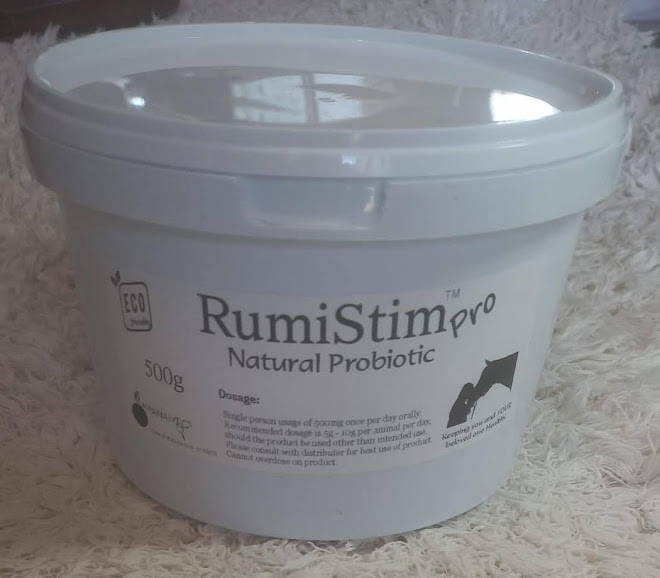
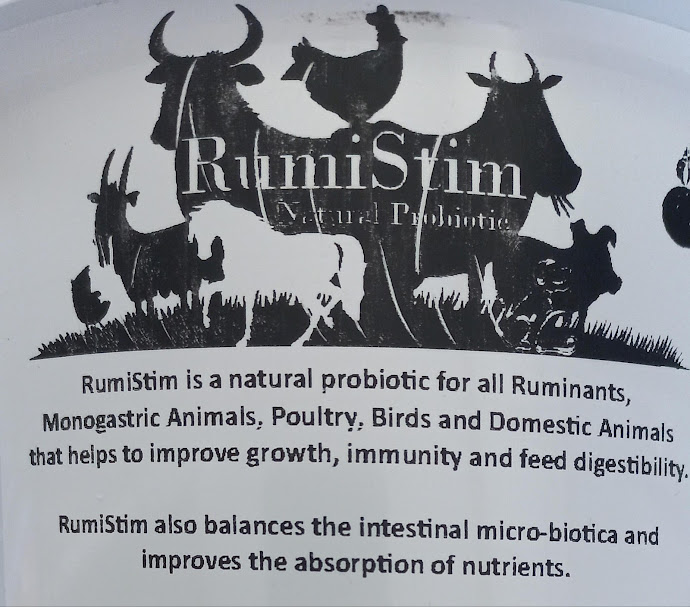
RumiStim – Natural Probiotic
500g – R350.00
Office Lakeside, Western Cape, SA
*Available etc 48/36 hours
*Mon – Fri 9.00am – 15.30pm
*Delivery 2/3 days *Courier / Door Dropoff- R49.00
AGENTS/DISTRIBUTORS
500kg R300,00 (3 x R900,00)
Delivery 2/3 days Couriers
Lakeside, Western Cape
# ORDER
# info@tradeline.co.za
# Paul Staegemann * WhatsApp Message 071 523 9747
# Capitec Bank *Tradeline 1355 822 058
Probiotic Feeding Recommendations
Cattle, Dairy & Cows – 10g or 1 Scoop/day
Horse – 10g or 1 Scoop/day
Sheep, Goat & Pig – 5g or 0,5 Scoop/day
Poultry, Birds, People & Domestic Animals – 3g & 0,3 Scoop/day
Technical Data
The product in question is RumiStim and the following research and analysis information has been assembled based upon the 19 microbes it contained. Combination of Bifidobacterium ssp., Bacillus ssp., Lactobacillus ssp., Lactococcus ssp. and few more is used as a probiotic to help daily gains and maintain health in Livestock. We are in the process of applying for registration by the registrar as soon as this lockdown allows us under registration for animal feeds and additives.
Functions of Bacilli:
Adjust effectively micro-ecology bacteria group balance in animal gut, restrain the growth of colibacillus, salmonella and other harmful bacteria and promote the growth of beneficial bacteria breeding, such as lactobacillus, bifidobacterium etc. It can control bacterial diseases which protect against the gastrointestinal diseases like diarrhea etc.. reduces animal morbidity and the dosage of antibiotic. By inhibiting the pathogenic microorganisms it prevent and reduce the diseases, reduce the drug residues.
Increases digestion utilization rate of feed and produce multiple activating enzymes and enzymatic activator to promote animal growth, reduce feed dosage and improve the feed efficiency. It also secrete out a large amount of nutrient substances during its growing and reproduction such as protease, organic acid, amino acid, polysaccharide and cytokinin, greatly promoting the growth of the animal even more. Improves utilization of protein and nutrients in feed, enhance feed intake and ADG (Average daily growth), reducing feed cost, decreases the usage of enzymes. It also enhance immune function and improve stress resistance in animals.
These bacilli inhibit harmful microorganisms, promote the digestion and absorption and prevent animals from indigestion. Improves the content of calcium and phosphorus in serum. Decreases activity of bacterial urease and cysteine desulfhydrase, reduce the concentration of ammonia and hydrogen sulfide in feces and intestinal tract, clean the breeding environment and reduce environmental pollution.
Functions of Lactobacilli:
Produces antibacterial substances and inhibit harmful bacteria growth in intestinal tract. Improves immunity and reduce diarrhea issues. Produces organic acids and digestive enzymes which improves feed utilization and promote animal growth. Balances intestinal microflora, improve the integrity of intestinal mucosa and enhance animal health. Enhances anti-stress ability and absorb mycotoxin and improve feed quality. These Lactobacilli can secret Lactic Acid and produces protease, amylase, lipase and other digestive enzyme which help to break down the feedstuff. Produces compounds like the B series Vitamins, Amino Acid and other nutrient substance which promote animal growth.
By producing lactic acid and acetic acid it increases the utilization of calcium, phosphorus and iron. Improves daily gain and reduce feed conversion rate. Improves the animal antibody level and macrophage activity, stimulates secretion type immunoglobulin synthesis, enhance the specific and non-specific immunity and reduce the mortality of animals.
Inhibits the reproduction of bacteria producing urease and putrefying bacteria in the intestinal tract and also reduces the content of intestinal urease and endotoxin, decreases the content of ammonia and endotoxin in blood, lower concentrations of fecal ammonia, improves the breeding environment. Inhibits the growth of E.coli, salmonella and staphylococcus aureus by which it improves the intestinal microenvironment. It’s a natural antimicrobial and antiseptic and is safe for animal and human ingestion. It can activate the enzymes as needed, promotes -nitrogen, – sugar and -lipid metabolism, improve the feed conversion rate and ADG which aid in better meat quality.
The working mechanism:
These organisms compete with harmful bacterium for the attachment points in the digestive tract, produce antibacterial material, and compete with harmful bacteria to get nutrients and strive for oxygen by biological mechanisms. Thereby establishing normal microflora in the digestive tract, adjust and improve immune function, improve digestion and absorption function and prevent toxic amine synthesized. Promotes the beneficial anaerobic bacteria growing and generate the organic acids like lactic acid, inhibit the growth of other pathogenic bacteria indirectly. They can stimulate the growth and development of the immune organs of animals, activate lymphocyte T, B, lift the level of immune protein and antibodies and enhances the functions of cell immunity as well as tumor immunity. They can compound several
kinds of vitamins and produce vitamins such as B1, B2, B6, vitamin C and vitamin K2 during the growth and breeding of animals, which provides vitamin nutrition for animals.
These Bacilli can generate a large amount of substances during its growing and reproduction such as amino acid, polysaccharide and cytokinin, helpful for the animals to grow, so it has been recognized as an endophyte making it natural and safe as a growth promoter. Adsorb of aflatoxin, reduces the toxicity of aflatoxin on animals by combining aflatoxin B1 to form aflatoxin B1-lactic acid bacteria.
Generates subtilin, polymyxin, short bacilli peptide etc. during active substances in the growth process. Replacing part of antibiotics, it is safe, green, non-toxic, no residue, non-corrosive, no compatibility taboo and without pollution and side effects, harmless to animals. These Bacilli is easy to use. With biodegradability and ecological security, it has no negative effects to the environment.
Good stability such as acid-proof, salt-tolerant, heat-resistant and compression resistant; maintain high stability during feed granulating and the process of getting through the acidic conditions in the stomach. Available in many kinds of strong enzyme activity, including protease, lipase and amylase. It contains enzymes such as pectinase, glucanase, cellulose etc. which can degrade non-amylase polysaccharide enzyme in plant feed, thereby improve utilization of protein and energy.
The Lactobacilli has a highly active extracellular enzymes such as protease, lipase, amylase, glycosidase etc. It also produces non-starch polysaccharides enzymes such as pectinase, cellulase and glucanase, which can degrade anti-nutritional factors in animal feed and improve feed utilization. It contains rich protease I, protease II and
lipase, which can improve digestion and absorption of fats and protein. As the carrier of amino acids, it can transport amino acids without breaking it down, benefitting animal growth promotion. It also produces butyric acid to inhibit the activity of deacetylase and also produces folic acid to involve in the methylation and demethylation of genes, regulating the gene expression of the host, preventing and treating diseases such as enteritis and diarrhea. Secretes Bacteriocins such as butyricin, inhibited the growth of Clostridium perfringens and Salmonella, decrease the incidence of necrotic enteritis and other enteric diseases. Produce hydrogen in the intestines and has a strong repairing effect on various internal organs, especially liver and spleen oxidative damage. Excellent butyric acid production capacity
Some of the Lactobacilli can prevent pathogenic bacteria breeding by adhesion mechanism and competition exclusion which can also prevent disease. It can produce organic acid and volatile fatty acid and fight nutritional ingredients with harmful bacteria to inhibit it’s growth. It can also form a biofilm to attach to the
intestinal mucosa of young animals to produce and reproduce normally which forms a lactobacillus barrier to resist the invasion of foreign toxins and pathogenic bacteria
and to maintain the integrity of the intestinal epithelial barrier. Other lactobacilli can
produce bacteriostatic substances such as bacteriocins and inhibit pathogenic bacteria such as Escherichia coli and salmonella and that it can also produce enterocin, which can effectively inhibit the growth and reproduction of listeria, staphylococcus aureus and putrefactive microorganisms, so acting as a natural antibiotic, beneficial to animal health. These can produce out rich L-lactic acid in the growth process, at the same time, it also can convert variety of carbohydrate anaerobic extract into lactic acid, completely absorbed and utilized by animal, which can lower pH of intestinal tract, promote absorption of vitamin D and minerals such as Ca, P and Fe. Produces a variety of digestive enzymes, degrade part protein into amide and amino acid, soften the fibers in the feed, improving the utilization rate of
feed. It also can promote amide and amino acid absorption, enhance the synthesis of tissue proteins and improve the digestion and absorption of nutrient substances.


Tradeline lifestyle & technology
Di Verlaque 082 867 8000
Paul Staegemann 071 523 9747